What koicha is
Usucha, thin tea, is 2 g of matcha whisked into about 70 ml of water with a foam on top. Koicha, thick tea, is 4 g or more kneaded into about 30 ml of water, no foam, the consistency of warm honey. The ratio is roughly four times stronger. At that concentration every flaw in the tea is magnified: astringency becomes harsh, a thin leaf tastes flat, and a coarse grind feels sandy on the tongue. In the tea ceremony koicha is served first and from the better tea, and a tea house's reputation rests on its koicha grades. For a café or a restaurant it is the pour that justifies a $12 bowl.
What the leaf needs
- First harvest only. The spring flush has the most amino acids (the sweetness and umami) and the least catechin (the astringency). Second harvest can make a fine latte; it does not make koicha.
- Longer, heavier shading. Koicha tencha is shaded for longer than usucha tencha, which pushes amino acids up and chlorophyll deeper. The leaf is darker and softer.
- Careful selection. Stems and veins are removed before milling; only the soft leaf flesh goes in. That is part of why the grades at the top cost what they do.
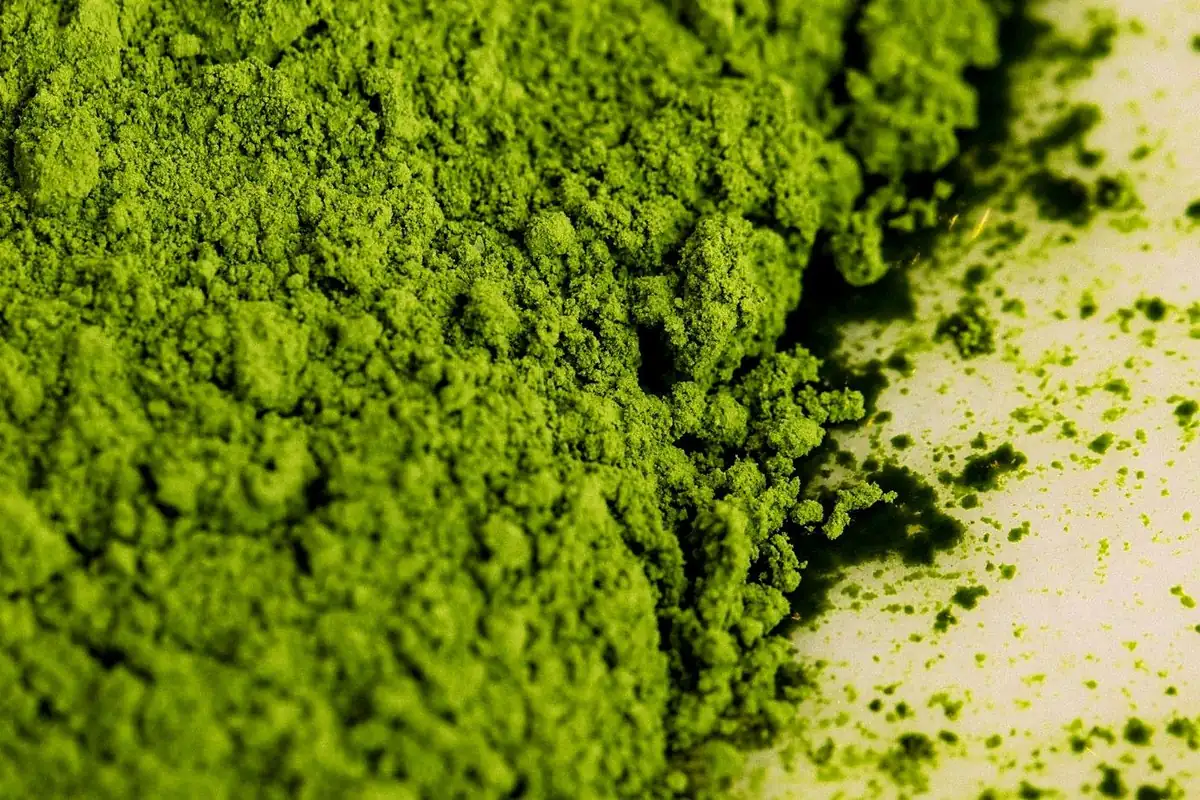
- Stone milling. A slow stone mill keeps the particle fine and the temperature low, which protects aroma. At a koicha ratio you feel the difference in texture.
The result in the cup is sweetness with depth, a thick texture, and no edge. If a tea makes you reach for sugar at 4 g in 30 ml, it is an usucha grade.
Koicha-capable grades in the catalog
Our own first-harvest lots, Hikari, Hoshi and Kiwami, are usucha grades: excellent whisked thin, built for the latte and the straight bowl. For koicha we point buyers to the top of the Marukyu Koyamaen range, which the maker itself describes as koicha-capable: five grades, all first harvest, all stone-milled, sold in 20 g, 40 g, 100 g and 200 g tins.
| Grade | Maker's description, condensed | USD / kg | 20 g tin | 40 g tin |
|---|---|---|---|---|
| Tenju | Top of the range; dense sweetness and deep aroma | $6,300 | $126 | $252 |
| Choan | Round, generous body, mellow finish | $2,200 | $44 | $88 |
| Eiju | Smooth and full, for drinking straight | $1,400 | $28 | $56 |
| Unkaku | Soft on the palate, sweet nose, deep body | $1,100 | $22 | $44 |
| Kinrin | Still koicha-capable, with brightness | $850 | $17 | $34 |
Unkaku is the one tea schools commonly use for practice koicha, and it is where we suggest a restaurant starts: the character is there at a quarter of Choan's price. Tenju is the flagship, the tea for a tasting menu that wants the best bowl in the building. Kinrin is the entry: koicha on a quiet afternoon, usucha for the rest of the day.
Preparing it
Water temperature matters more here than for a latte. Above 80 °C the sweetness tips into bitterness even on a good tea. The sieve is not optional: at 4 g in 30 ml a lump never dissolves.
Cost per bowl
At 4 g per bowl the tea cost is the price per kilo divided by 250. The spread across the five grades is the whole argument for having more than one on the list.
- Tenju: $25.20 per bowl. One 20 g tin is five bowls.
- Choan: $8.80 per bowl.
- Eiju: $5.60 per bowl.
- Unkaku: $4.40 per bowl.
- Kinrin: $3.40 per bowl, and $1.70 as usucha.
For comparison, a latte on our café grades costs $0.72 to $1.26 of tea at 4 g. Koicha is a different product at a different price, and it should be on the menu that way: a bowl, a name, and a price that reflects the leaf.
Who buys koicha grades
Three kinds of customers order the top of the range from us. Restaurants with a tasting menu that ends with tea rather than coffee. Hotels with a tea service, where a named Uji grade in the maker's tin sits beside the coffee programme. And matcha bars that want a ladder on the menu, usucha at one price and koicha at another, so the customer can taste what the difference buys. In every case the tin itself does part of the work: it is the maker's packaging, unopened, and the certificate of analysis travels with it.
The MOQ on the tin grades is ten tins, sizes mixed as you like. Samples are priced by the gram at the same rate and sent in the maker's smallest pack; ask on the contact page or see the full range. For a usucha grade of our own at a wholesale kilo price, how we grade explains where Hikari, Hoshi and Kiwami sit.
Questions buyers ask
What is the difference between koicha and usucha matcha?
Usucha is 2 g whisked into about 70 ml of water with foam. Koicha is 4 g or more kneaded into about 30 ml with no foam, roughly four times stronger. Koicha needs first-harvest, heavily shaded, stone-milled tea with very low astringency.
Which matcha grades can be used for koicha?
From the range we sell, the maker describes Tenju, Choan, Eiju, Unkaku and Kinrin as koicha-capable: first harvest only, stone-milled, in tins. Our own first-harvest lots are usucha grades.
How much does a bowl of koicha cost in tea?
At 4 g per bowl: Tenju $25.20, Choan $8.80, Eiju $5.60, Unkaku $4.40, Kinrin $3.40, at list price per kilo. A 20 g tin of Tenju is five bowls.
What water temperature for koicha?
About 75 °C, added in two pours, kneaded rather than whisked, until the paste flows like honey. Hotter water brings out bitterness even in a good tea.