Why your accounts are asking you
A roaster's wholesale account is a café that already trusts you with the most important thing on the bar. When that café adds a matcha latte, the owner has two choices: find a matcha importer, learn a new product, and manage one more invoice, or ask the roaster. Most ask the roaster. You already deliver weekly, you already visit to dial in the grinder, and your rep already knows how the bar is laid out. Matcha is one more bag in the same van. The question is not whether to sell it, but how to do it without becoming an importer of a product you did not grow up with.
The good news is that the matcha side is simpler than coffee. There is no roasting, no degassing, no grind size to chase every morning. The product arrives finished, sealed in nitrogen-flushed foil, and it stays stable until the bag is opened. What a roaster brings is logistics, training and a brand the café already buys from. What the supplier in Japan brings is the lot, the paperwork and a price per kilo that does not move every week.
Two grades, not twelve
The mistake we see from roasters is copying the coffee menu: five origins, a seasonal, a decaf. A café bar needs two matchas. One is the house latte grade, bought by the kilo and packed as 100 g bags so each bag is opened and finished inside a week. The other is a first-harvest lot for a premium pour, usucha or a signature drink, bought in smaller volume. Everything else is a special order. Our grades page explains how we split ceremonial, café and culinary, and why the café grade is the one that carries the volume.
For the house grade we usually send Megumi, a second-harvest Yabukita from Yame at $185 / kg, FOB Osaka: classic flavour, more body than a first harvest, and a colour that holds in milk. For the premium slot, a first-harvest lot such as Hikari at $240 / kg, FOB Osaka, bright and clean enough to whisk straight. Both have a minimum of 1 kg, so a roaster can hold both without tying up cash.
What to ask the supplier in Japan
Treat it like green coffee buying, with a shorter list. The questions that matter:
- Which harvest and which region. First harvest or second, Yame, Kagoshima or Shizuoka. It is on every product page of ours and it should be on the spec sheet of anyone else.
- A certificate of analysis for the lot. Moisture, particle size, microbiology, heavy metals and residues. Our guide to reading a matcha COA goes line by line.
- Price per kilo, and for how long. We publish ours in USD per kilo, FOB Osaka, and we can fix a price for the harvest year on a standing order.
- Pack format. 100 g bags for the bar at the same price per kilo as bulk, 1 kg foil for the kitchen.
- Lead time and samples. We ship samples of up to six teas at 20 g each for $5 a sample plus shipping, within 3 business days of payment, and we answer quote requests within 1 business day.
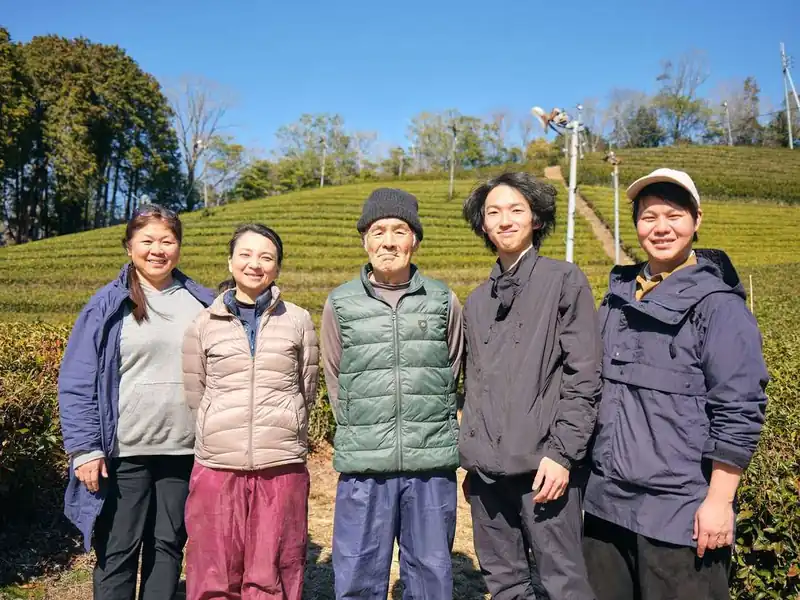
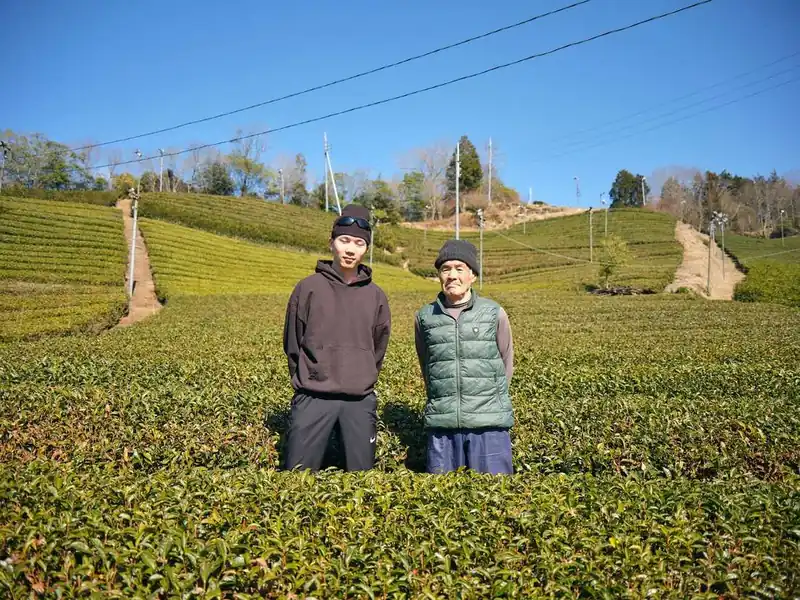
One thing you do not need to ask is whether the tea comes straight from a farm. Matcha is finished at a mill, where the shaded leaf is steamed, dried, sorted and ground. We buy at the mills, the mills hold the certificates, and the lot number on your bag traces back to them.
The cost sheet per cup
A matcha latte is 4 g of matcha, 40 ml of water at 80 °C and 180 ml of milk. At that dose a kilo is 250 drinks, which makes the tea cost per cup easy to see for any price per kilo. The table below uses our list prices, before freight and duty, so a roaster can add its own landed cost and margin on top.
| Lot | Price per kg, FOB Osaka | Tea per 4 g cup | Drinks per kg |
|---|---|---|---|
| Megumi, café grade, 2nd harvest Yame | $185 | $0.74 | 250 |
| Hikari, ceremonial, 1st harvest Shizuoka | $240 | $0.96 | 250 |
| Aki, culinary, autumn Yame | $100 | $0.40 | 250 |
Most roasters resell to accounts by the 100 g bag with a markup that covers freight, the training visit and the margin they would make on a kilo of coffee. The arithmetic is the same as for beans, with one difference in your favour: a 100 g bag of matcha is 25 drinks, and it does not stale in two weeks. Our latte pricing guide has the full cup cost with milk and cup for the café side of the conversation.
Training the accounts in one visit
The reason cafés want matcha from a roaster is the visit. A ten-minute session on the bar fixes most of what goes wrong: sift the 4 g, whisk or blend it in 40 ml of water at 80 °C until there is no grit, then add the milk. Steam-wand water is too hot and the powder scorches, which is where bitter green drinks come from. Keep the open bag in the fridge, bring out one 100 g bag at a time, and finish it inside a week. Our storage guide and the café recipes are written to be printed and left on the bar.
Leave the account with a sample of the premium lot as well. A café that pours Megumi all day and tastes Hikari once a month is a café that adds the second SKU on its own.
Your own name on the pouch
Roasters already sell retail bags of coffee across the counter of their accounts, and a 30 g matcha pouch sits well next to them. Private label with a sticker label starts at 200 units per design, with full-print pouches from 1,000, and sticker runs ship about two weeks after proof approval. The tea inside is any lot in the catalog at its list price per kilo. The OEM page has the quote builder, and our private label guide covers the back-panel rules by country.
A starter order
- Order samples of two or three café grades and two first-harvest lots. Taste them as lattes on your own bar first, the way the accounts will.
- Choose one house grade and one premium. Order 1 kg of each to start, the house grade packed as 100 g bags.
- Price per 100 g bag for your accounts, using the cup cost above plus freight and your margin.
- Train each account on the bar in one visit: dose, water temperature, storage.
- Once the monthly volume is steady, fix the price for the harvest year on a standing order, and add a private label pouch for the retail shelf.
That is the whole program. Two bags in the van, one page of instructions, and a product that holds its colour and its price while you get on with the coffee.
Questions buyers ask
Can a coffee roaster buy matcha wholesale from Japan?
Yes. Our minimum is 1 kg on most lots, prices are public in USD per kilo, FOB Osaka, and we ship from Osaka by courier. Roasters usually hold one café grade and one first-harvest lot and resell them to their wholesale accounts in 100 g bags.
Which matcha grade should a roaster stock for cafés?
A café grade for the house latte, packed as 100 g bags, and a first-harvest ceremonial lot for a premium pour. Megumi at $185 / kg and Hikari at $240 / kg, FOB Osaka, is a typical pair.
How much does the matcha cost per latte?
At 4 g per drink a kilo makes 250 lattes, so a $185 / kg lot is $0.74 of tea per cup before freight, milk and cup.
Can a roaster put its own brand on matcha?
Yes. Private label with a sticker label starts at 200 units per design and full-print pouches at 1,000. The tea is any lot in the catalog at its list price per kilo, and the OEM quote builder prices the run.
Prices and lots named in this article are as published on Nov 2026; the catalog always carries the current list price per kilo.