What is actually happening
The green in matcha is chlorophyll. Chlorophyll is fragile: with heat, light, acid or time it loses its magnesium atom and becomes pheophytin, which is olive-brown. Alongside it, the catechins in the leaf oxidise in air and go yellow-brown, the same reaction that turns a cut apple. Milk does not cause either; milk just makes the change easy to see.
So a latte that browns has one or more of these working on it: it started with less chlorophyll than it should have, the powder was already partly oxidised in the bag, it was made with hot water, it sat in light, or it has acid in it (fruit syrups, lemonade, some plant milks). Usually it is the first two.
Why the grade decides most of it
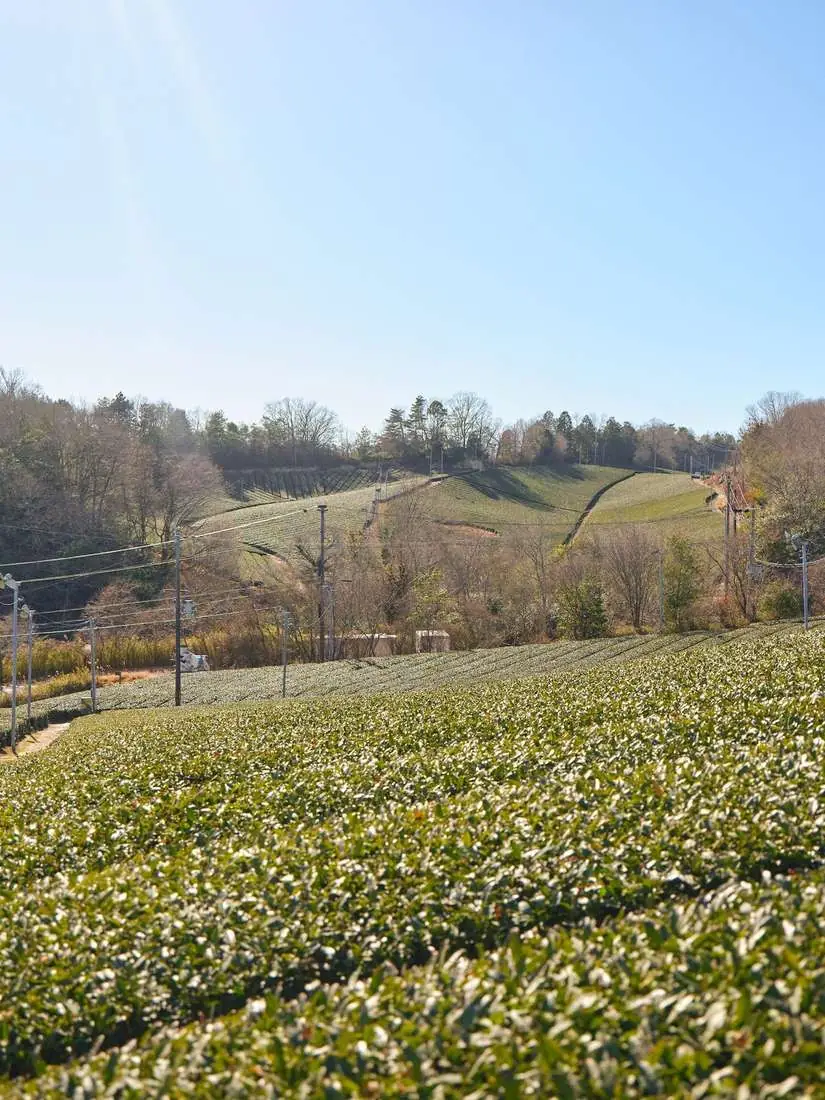
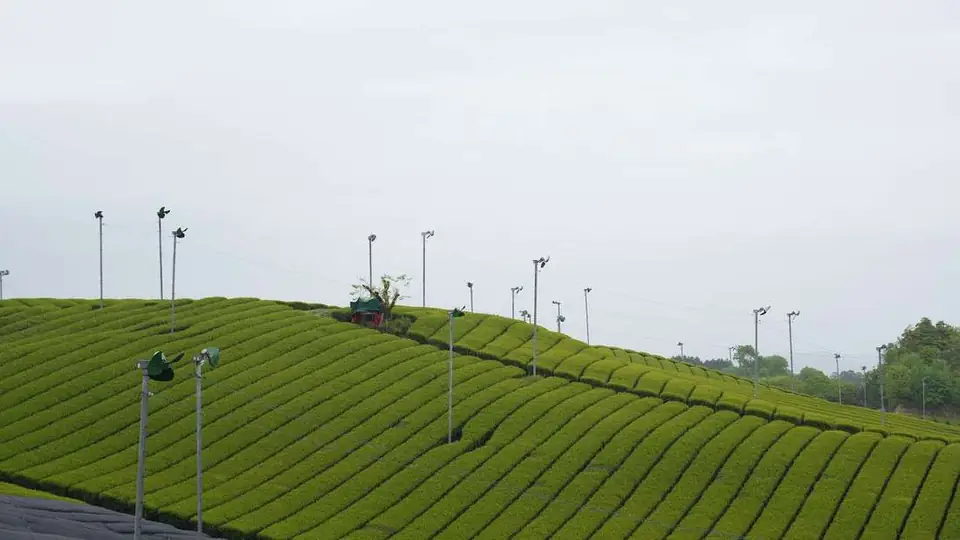
Shading is what loads the leaf with chlorophyll. When a tea field is covered for 20 to 30 days before harvest, the plant responds to the dark by making more chlorophyll and more theanine, which is why tencha is both greener and sweeter than the same leaf grown in sun. First-harvest leaf has the most of both. Later harvests, grown in summer light, have less chlorophyll and more catechins, which means they start less green and brown faster.
| Leaf | Colour at 9 am | Colour after 4 hours iced, no light | Best for |
|---|---|---|---|
| First harvest, 25+ days shading (our ceremonial lots) | Vivid, blue-green | Still green, slightly softer | Everything, especially iced |
| Second harvest, shaded 20 days (our café lots) | Bright green | Green with a hint of olive | Lattes, blended drinks |
| Later harvest, short shading (culinary) | Yellow-green | Olive | Baking, ice cream, hidden under syrup |
| Unshaded green tea powder | Yellow | Brown | Not for drinks sold on colour |
Particle size matters too. A powder milled to under about 10 µm stays suspended and reads as an even green; a coarser powder settles and looks muddy in the bottom third of the cup. The mill is the second thing to ask about after shading.
Prep: five changes that add hours
- Whisk with cool or 70 °C water, never boiling. Chlorophyll degrades fast above 80 °C. For iced drinks, whisk or shake with room-temperature water; you lose nothing but the browning.
- Sift. Lumps are pockets of dry powder that oxidise at the surface and show as brown specks. A tea strainer over the bowl takes five seconds.
- Make it to order, or batch small and cold. A batched matcha concentrate in a fridge, covered, lasts a shift. The same concentrate in a clear pitcher on the counter under a window is brown by lunch.
- Watch the acid. Strawberry, mango, yuzu and lemonade all drop the pH and speed the change. Layer the fruit at the bottom and the matcha on top, and serve at once; that is why the layered look exists.
- Keep the dose at 2 g. Over-dosing to chase colour does not work with a weak matcha; it just makes a bitter brown drink. Fix the leaf.
Storage: the bag you opened last month
Matcha has an enormous surface area for its weight, and every gram that touches air starts to oxidise. Unopened, nitrogen-flushed foil keeps it fresh for a year; opened, it has four to six weeks at its best if it is sealed, cold and dark, and less if it lives next to the espresso machine. The cheapest upgrade in most cafés is buying 100 g bags instead of 1 kg bags and keeping the open one in the fridge. Ours come in 100 g and 1 kg foil for that reason.
A two-cup test for any supplier
Make two iced lattes at opening with the same milk, one with the sample and one with what you pour now. Put both in the fridge, covered. Look at 3 pm. Then taste both. A supplier whose matcha fails this test will not be helped by a bigger dose or a better whisk. Our samples are 20 g, which is enough for ten of these cups, and our first-harvest lots (Hoshi, Hikari, Takumi) are the ones we send when a buyer's problem is colour.
Questions buyers ask
Why does my matcha latte turn brown?
Chlorophyll in the leaf breaks down to olive-brown pheophytin with heat, light, acid and time, and catechins oxidise in air. It happens fastest with later-harvest or unshaded powder, stale opened bags, hot water and fruit syrups.
Which matcha stays green the longest?
First-harvest, shaded 25 days or more, milled fine (under about 10 µm) and freshly opened. Second-harvest shaded café grades hold well for a few hours; unshaded green tea powder does not.
Does oat milk make matcha brown?
Not by itself. Some plant milks are slightly acidic and speed the change a little; fruit syrups and lemonade do much more. Milk mostly makes the change visible.
How long does opened matcha last?
Four to six weeks at its best, sealed, in the fridge, away from light. Unopened nitrogen-flushed foil bags keep for about 12 months.