The map
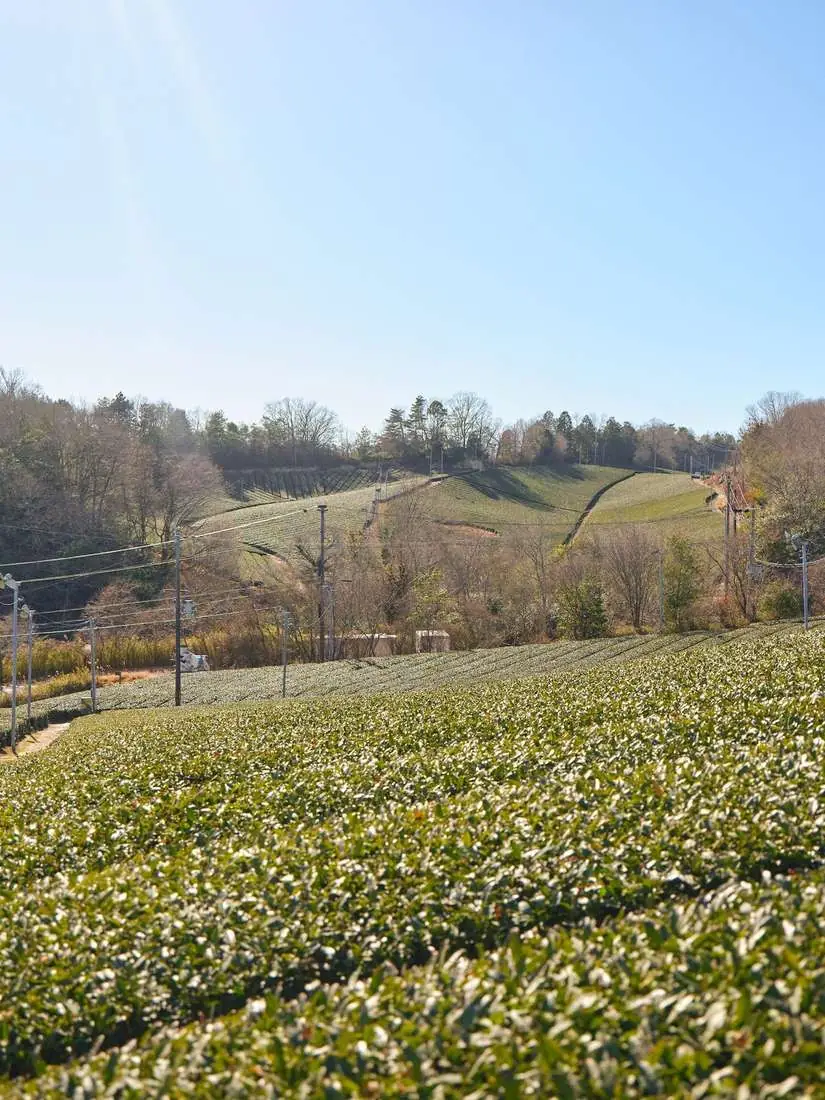
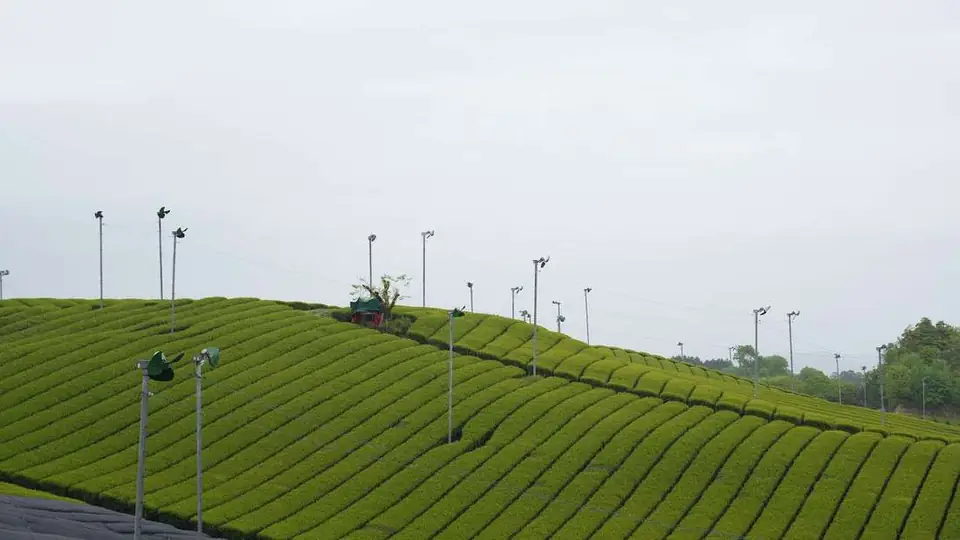
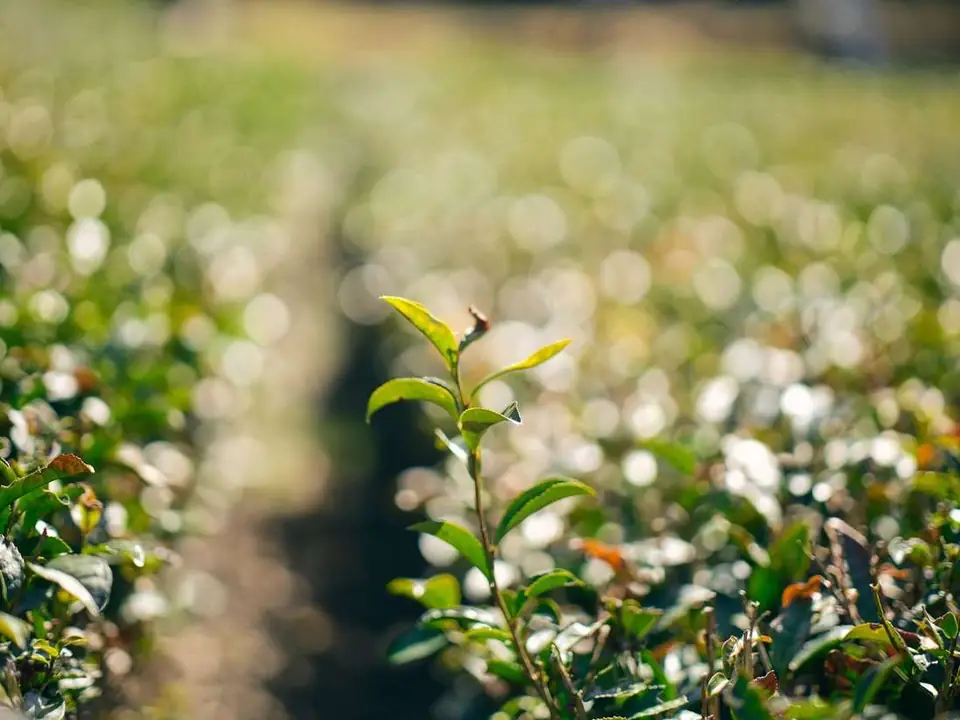
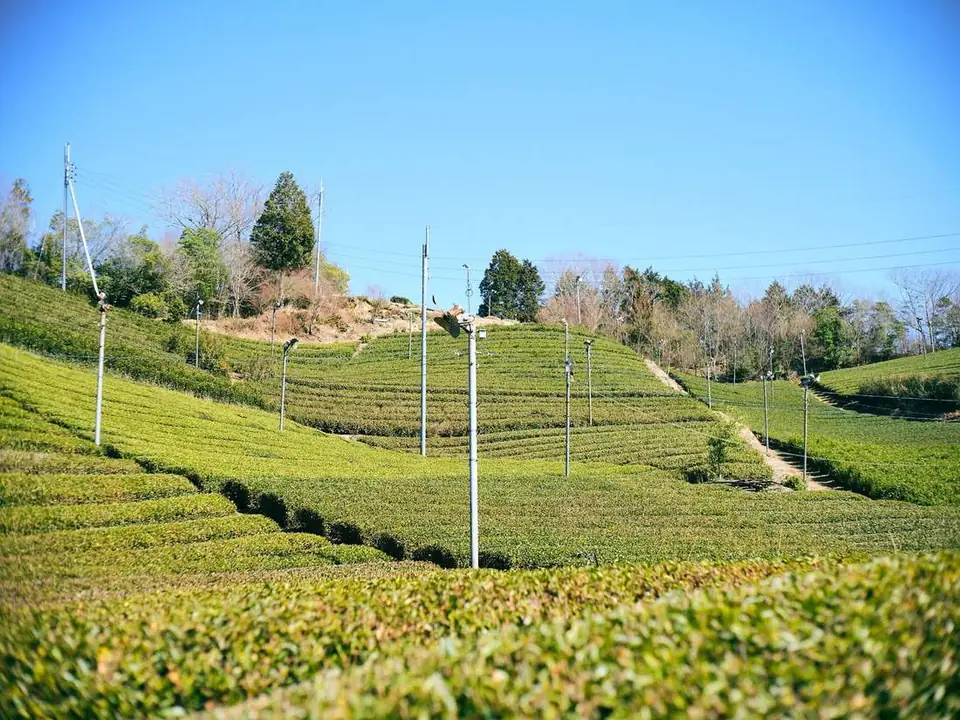
Japan grows tea from Kagoshima in the far south-west to the northern edge of Honshu, but tencha, the shaded leaf that becomes matcha, is concentrated in four places: Kyoto (Uji and the Yamashiro hills), Fukuoka (Yame), Kagoshima, and Aichi (Nishio). Shizuoka, the largest tea prefecture overall, grows mostly sencha and is a fast-growing fifth. Each region has a climate, a terrain and a set of habits, and you can taste them.
| Uji (Kyoto) | Yame (Fukuoka) | Kagoshima | |
|---|---|---|---|
| Terrain | Hills, small terraced plots | Mountain slopes and plateau, mist | Flat volcanic plains |
| First harvest | Mid – late May | Early – mid May | Late April – early May |
| Typical cultivars | Samidori, Uji-hikari, Asahi, Yabukita | Yabukita, Saemidori, Okumidori | Yutakamidori, Saemidori, Asatsuyu, Okumidori |
| Picking | Hand and machine | Mostly machine, some hand | Machine |
| Cup | Aromatic, refined, lighter body | Deep umami, thick, low bitterness | Bright, sweet, vivid colour |
| Supply | Smallest, most contested | Small–medium | Largest first harvest in Japan (2025) |
| Organic share | Low | Low–medium | Highest |
| Our first-harvest price | By request | $275 – 315 / kg | $215 – 275 / kg |
Uji: the brand
Uji has four hundred years of matcha history and the tea houses of Kyoto behind it, and it deserves its reputation: the best Uji lots, hand-picked, from covered fields on the old terraces, are the most aromatic matcha there is. Two things a buyer should know. First, Uji is a finishing name, not a protected origin: leaf from Kyoto and three neighbouring prefectures finished by Kyoto firms is sold as Uji, and the name on the bag tells you where it was blended. Second, everyone wants it. Kyoto first-harvest tencha averaged about ¥14,500 per kg at auction in 2025, nearly three times 2024, and the top lots went far higher. Our Uji note goes into what the name guarantees. We source named Uji lots on request; we do not put them behind lattes.
Yame: the mountain tencha
Yame, in the hills of southern Fukuoka, is best known in Japan for gyokuro, the shaded leaf tea, and the same skill makes its tencha. The plateau and slopes are cool and misty in spring, the shading is long, and the result is a matcha with the thickest body and the deepest umami of the three, with very little bitterness. It is the region we send when a buyer's problem is a latte that tastes thin or a usucha that bites. Yame is small, and its first-harvest tencha set its own record in 2025, but it has far less brand pressure than Uji and the mills we work with have long contracts with their farmers. Our Yame lots: Hoshi, Takumi, Sae and Oku for first harvest, Izumi and Megumi for café grade.
Kagoshima: the volume and the cultivars
Kagoshima is warm, flat and volcanic, and it picks the earliest first harvest in Japan. Its farms are large and mechanised, it has the highest share of organic tea in the country, and in 2025 it overtook Shizuoka in first-harvest volume for the first time. The cup is bright and sweet rather than deep, with vivid colour, and the region's modern cultivars (Yutakamidori, Saemidori, Asatsuyu) were bred for exactly that. For a café pouring two hundred lattes a day, Kagoshima is usually the right answer: steady supply, a price a menu can carry, and colour that survives milk and ice. It is also where organic and residue-tested lots are easiest to find. Ours: Jun (JAS and USDA organic), Yutaka, Tabi (tested to US limits), Minami and Tsuyu.
And Shizuoka
Shizuoka is sencha country and was late to tencha, but it is changing fast as sencha demand falls. Kakegawa, on the coast, makes a first-harvest matcha with a clean, savoury character (Hikari, our best seller), and a certified Shizuoka mill supplies our Halal and Kosher lots. Nishio in Aichi, historically the largest tencha producer, and Mie and Miyazaki are available on request.
How to choose
- Latte, high volume: Kagoshima or Yame second harvest. Colour and price.
- Latte, signature, no syrup: Yame first harvest. Body and umami through milk.
- Usucha, tea service, retail tin with a story: Yame or Kakegawa first harvest; Uji by request if the name matters to your customers.
- Organic menu: Kagoshima.
- Halal or Kosher required: our Shizuoka mill lots, plus Yame for the ceremonial.
Or skip the theory. Three samples, one from each region, tasted side by side in the drink you actually sell, will tell you more in twenty minutes than any map.
Questions buyers ask
Is Uji matcha better than Yame or Kagoshima?
The best Uji lots are the most aromatic, but Uji is a finishing name rather than a grade, and its prices roughly tripled in 2025. Yame gives deeper umami and body; Kagoshima gives bright colour and steady volume. For most café menus Yame or Kagoshima is the better buy.
Which matcha region is best for lattes?
Yame for body and umami through milk; Kagoshima for vivid colour, volume and price. Both hold up better than a mid-grade Uji at the same price.
Where does organic matcha come from?
Mostly Kagoshima, which has the highest share of organic tea in Japan. Our JAS and USDA organic lot, Jun, is Kagoshima first harvest.